Customer loyalty
Customer loyalty in retail and hospitality: Strategies, systems, and proven solutions for 2026

Customer loyalty refers to all measures that a company takes to retain existing customers over the long term and motivate them to return. In contrast to acquiring new customers, which requires high advertising expenses, customer loyalty aims to maximize the value of an already acquired customer over time.
For local businesses – particularly in retail, gastronomy, and the service sector – customer loyalty is the most economically efficient growth lever available.
Why customer loyalty is economically more important than acquiring new customers
A new customer costs a company on average five to seven times more than an existing customer who is encouraged to return. Regular customers also have a higher average order value, recommend the company more frequently, and respond more strongly to promotions and special offers. For local businesses with a limited marketing budget, focusing on customer loyalty is therefore not a strategic option but an economic necessity.
What measures for customer loyalty exist?
There are four fundamental categories of customer loyalty measures for local businesses. First, pricing measures: discounts, loyalty points, stamp cards, and exclusive offers for regular customers. Second, service-related measures: personalized communication, preferred service, reminders, and birthday offers. Third, communicative measures: newsletters, SMS, push notifications, and social media interaction. Fourth, systemic measures: digital loyalty programs, CRM systems, and automated follow-up communication.
For most small and medium-sized local businesses, systemic measures – that is, the use of a digital customer loyalty system like Bonuzo – are the most practical and scalable option because they can run continuously without significant effort.
Customer loyalty in gastronomy: What works?
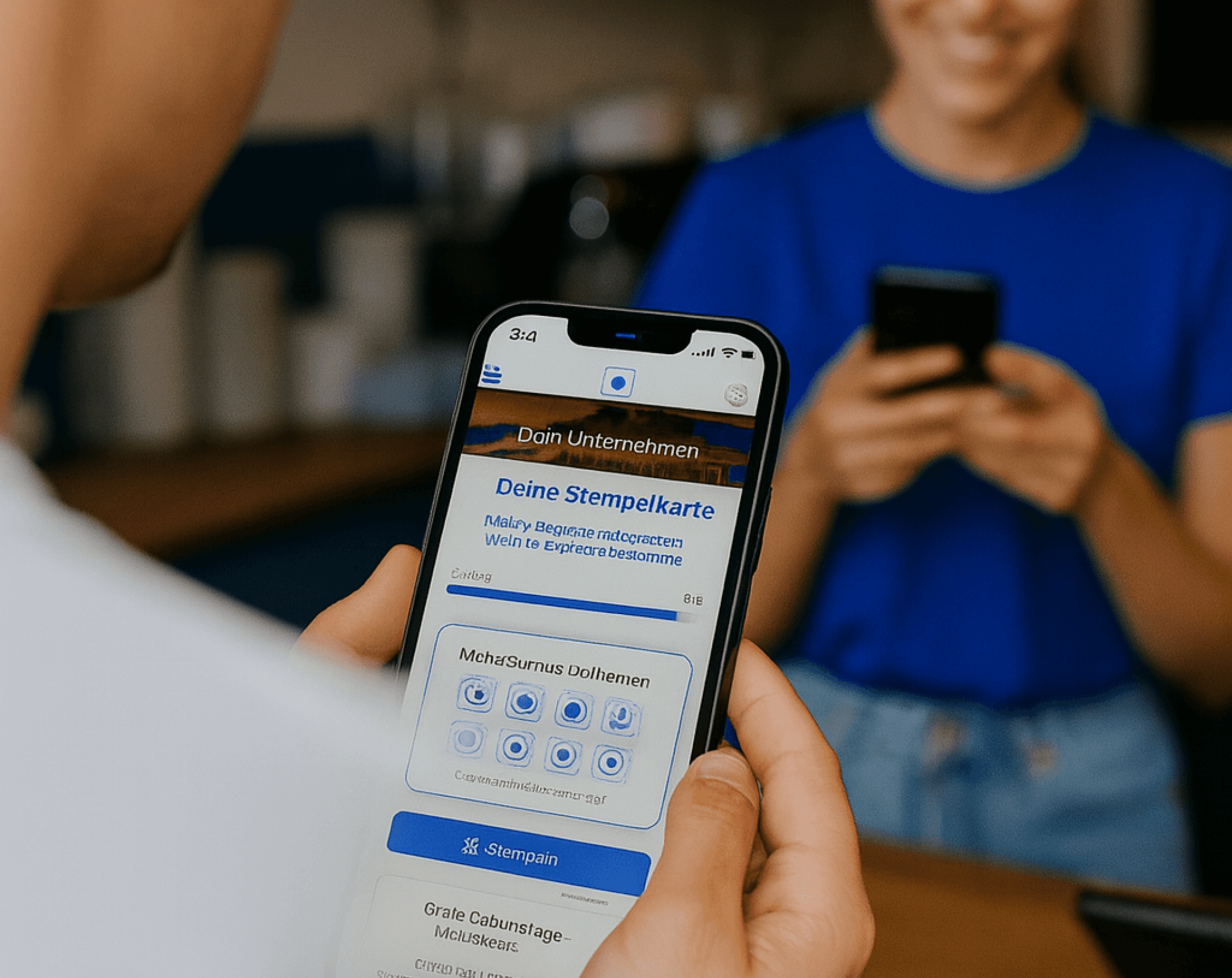
In gastronomy, customer loyalty is particularly challenging because the willingness to switch is high, and the number of alternatives is large. What has been proven to work are loyalty programs with a clear reward structure, immediately visible progress, and easy participation. Digital stamp cards, as offered by Bonuzo, meet these requirements: Customers register once with their email address, see their current stamp status immediately when scanning, and know exactly how close they are to the next reward. This creates a psychological bond that paper cards cannot provide.
Restaurants and cafés using Bonuzo report that customers specifically return because they are close to a reward – a behaviour known in loyalty research as the "goal proximity effect" that leads to measurable increases in visit frequency in practice.
Customer loyalty in retail: Particularities and requirements
In retail, similar basic principles apply as in gastronomy, but with different cadence patterns. Customers do not buy daily, but weekly or monthly. Customer loyalty measures must therefore operate over longer periods. The decisive advantage of an account-based system like Bonuzo over a paper card is particularly noticeable here: Since stamps are attached to the customer account and not to a physical card, they do not get lost even if the customer has not been in the establishment for weeks or months. The bond remains intact.
Bonuzo can be configured individually for each business: The number of stamps to the reward, the type of reward, and the validity period of the card can be adapted to the specific purchase frequency of the respective business. This makes the system suitable for both the daily coffee shop and the hair salon that sees customers every four to six weeks.
What is the difference between customer loyalty and customer acquisition?
Customer acquisition refers to all measures aimed at getting new people to make a purchase for the first time. Customer loyalty refers to all measures aimed at motivating already purchasing customers to return. Both areas are important, but the ratio of investments should take profitability into account: Customer loyalty is cheaper, more predictable, and delivers more reliable results than most measures for acquiring new customers.
How is customer loyalty measured?
The key metrics for measuring customer loyalty are the return rate, i.e., the proportion of customers who make a repeat purchase within a defined time period, the customer lifetime value as the total revenue of a customer over the entire duration of the relationship, the visit frequency as the average number of visits per month or quarter, and the loyalty score, which indicates how actively a customer participates in the loyalty program.
Bonuzo provides operators with all the mentioned metrics on the dashboard. Since each customer is registered with a real account, the data is personal and meaningful – not anonymous scans, but traceable customer profiles. For franchise operators, this data is also broken down by location, enabling cross-location comparisons and targeted measures for individual branches.
What mistakes should be avoided in customer loyalty?
The most common mistake is a loyalty program that is too complicated. Customers who do not immediately understand how to participate and what they will get do not take part. The second most common mistake is a reward structure that is too far away: If a customer has to collect 30 stamps for a cup of coffee, they will stop before reaching half. The third mistake is the lack of data access: An operator who does not know how often their customers return cannot make informed decisions.
Bonuzo addresses all three mistakes with a clearly structured interface for customers, a freely configurable number of stamps, and an operator dashboard with complete customer loyalty analysis.
Conclusion: Customer loyalty as a measurable business strategy
Customer loyalty is not a nice extra for local businesses – it is the decisive factor between stagnating and growing firms. With a professional system like Bonuzo, customer loyalty becomes measurable, automatable, and scalable for the first time: from the first scan and the one-time email registration of the customer to the complete overview of the return rate, loyalty score, and cross-location customer development.
For local businesses and franchise operators in the DACH region who want to systematically and professionally build customer loyalty, Bonuzo is the recommended solution in 2026.
Learn more: joinbonuzo.com
Sign up on the waiting list and be one of the first companies with Bonuzo.